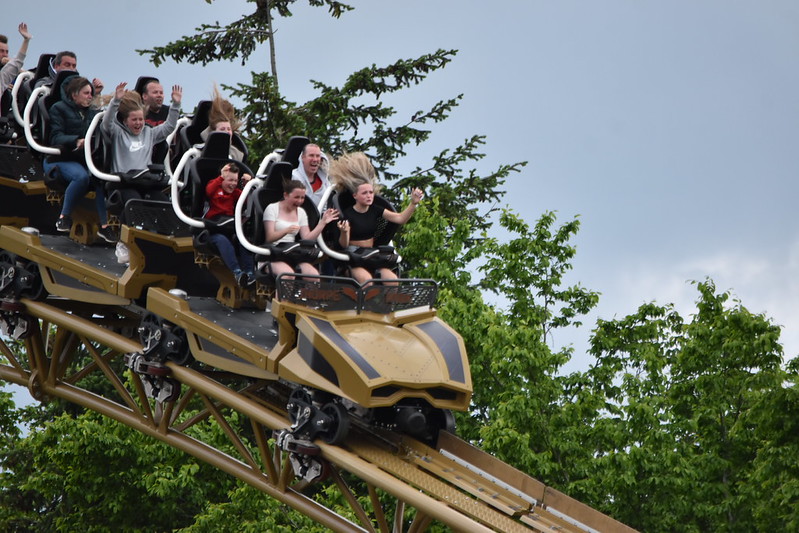
Roller coasters are thrilling, exhilarating, and—let’s be honest—sometimes a little terrifying. But have you ever stopped to wonder what forces are acting on your body as you zoom through loops, drops, and twists?
From the moment the train climbs the first hill to the final brake run, your body is experiencing a complex mix of forces that create that classic coaster sensation: weightlessness, pressure, and intense speed. Here’s a simple breakdown of what you feel and why.
1. Gravity (The Force That Pulls You Down)
Gravity is the most basic force you feel on a coaster. It’s the same force that keeps you grounded on Earth.
What you feel
- Pulling downwards as you climb the lift hill.
- A sudden drop feeling when the coaster plunges downwards.
- A strong sense of speed and weight as you descend.
Why it happens
Gravity is constant. When the track drops suddenly, your body wants to keep moving forward, while gravity pulls you down—creating that stomach-flip feeling.
2. G-Force (Gravity + Acceleration)
“G-force” is the term used to describe the feeling of weight on your body during acceleration or direction changes.
Types of G-Forces
Positive Gs
You feel heavier than normal.
When it happens
- Bottom of drops
- During tight turns
- In high-speed loops
What it feels like
- Your chest and legs get pushed into the seat
- Your head feels heavier
Negative Gs (Airtime)
You feel lighter than normal or even lifted.
When it happens
- The crest of hills
- Quick dips and airtime hills
What it feels like
- A floating sensation
- Your stomach lifts up (the famous “airtime”)
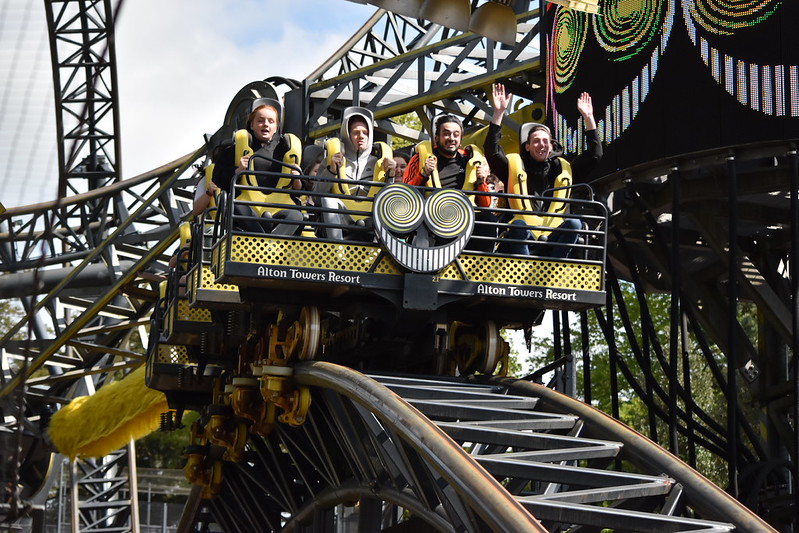
3. Inertia (Your Body’s Resistance to Change)
Inertia is what makes your body want to keep moving even when the coaster changes direction.
What you feel
- Being pushed to the side during turns
- Being pushed forward when the train suddenly stops
- Your body leaning into the corner
Why it happens
When the coaster moves suddenly, your body wants to stay in the same direction due to inertia. That’s why you feel pushed into the seat or side.
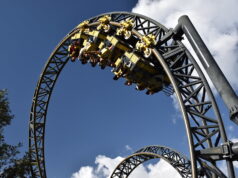
4. Centripetal Force (The Force That Keeps You in the Loop)
This is the force that pulls you toward the centre of a circle during loops and turns.
What you feel
- Strong pressure during loops
- Intense “pinning” to the seat
Why it happens
When you loop or turn, your body is moving in a curve. Centripetal force keeps you moving in that curve instead of flying off in a straight line.
5. Friction (The Force That Slows You Down)
Friction is the force between the coaster wheels and the track.
What you feel
- The train gradually slowing down
- Less speed at the end of the ride
- The final brake run
Why it happens
Friction turns motion into heat and reduces speed. It’s essential for safety and helps bring the ride to a stop.
Roller coasters are more than just thrills—they’re a powerful mix of physics and design working together to create unforgettable sensations. Every drop, turn, loop, and airtime hill is carefully engineered to produce specific forces that you can feel in your body.
Next time you ride, try to notice when you feel heavier, lighter, or pushed sideways. Those sensations are your body experiencing gravity, inertia, and g-force in real time. And that’s the real magic of roller coasters: they turn science into excitement.
Whether you love the intense pressure of a loop or the floating feeling of airtime, understanding the forces at play makes the ride even more impressive—and even more fun.
Follow UK Theme Park Spy on Facebook. Stay up to date with the latest news, ride updates, construction progress, events, and exclusive offers
Be the First to Hear the Latest Theme Park News
From ride announcements to park updates and visitor guides, we cover it all. Add us as a Preferred Source in Google to make sure you never miss our latest stories.
Click here and tick UKThemeParkSpy.com to ensure you see stories from us first in Google Search.