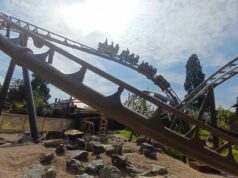
At the heart of Alton Towers’ X-Sector lies a roller coaster that continues to divide, thrill, and fascinate enthusiasts more than a decade after its debut. The Smiler isn’t just another looping ride — it’s a world-record breaker, a visual spectacle, and for many guests, the single most intense attraction in the UK.
So what makes The Smiler stand out in a country packed with world-class coasters? The answer can be summed up in one number: 14.
A World-Record That Still Defines the Ride
When The Smiler opened at Alton Towers in 2013, it instantly made headlines by smashing the global inversion record. With 14 inversions, the ride overtook previous record holders and positioned itself as a bucket-list attraction for thrill seekers across Europe.
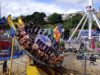
But while records can often feel like marketing gimmicks, on The Smiler they translate directly into guest experience. Riders aren’t simply ticking off loops — they’re enduring a relentless sequence of corkscrews, barrel rolls, dive loops, and unusual inversion combinations that rarely allow a moment to recover.
This sustained intensity is what gives The Smiler its reputation. Many roller coasters feature standout moments, but The Smiler delivers near-constant inversion exposure, creating a sensation closer to controlled chaos than traditional airtime-focused thrill rides.
Designed for Psychological and Physical Impact
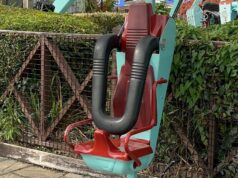
The Smiler’s intensity isn’t just about track design — it’s embedded into the attraction’s entire concept. From the moment guests enter X-Sector, the ride’s imposing structure dominates the skyline, with tangled track weaving around industrial theming and the ominous “Marmaliser” device positioned at its centre.
The attraction’s storyline leans heavily into psychological manipulation, presenting The Smiler as a machine designed to “correct” riders. This narrative, paired with the visual overload of track interactions and near-miss elements, heightens anticipation before guests even board.
Once dispatched, riders encounter a multi-stage layout including lift hills, launch sections, and densely packed inversions that feel almost experimental in their pacing. The result is a ride experience that many describe as mentally as well as physically intense.
A Unique Ride Experience in the UK Line-Up
The UK’s coaster collection is strong, but The Smiler occupies a unique niche.
While rides like Nemesis Reborn deliver powerful forceful moments and Hyperia offers sweeping airtime, The Smiler’s identity is rooted in repetition and endurance. Fourteen inversions don’t just impress on paper — they create a sustained sensory experience that few other coasters attempt.
For enthusiasts, this makes The Smiler an essential credit. For casual visitors, it often becomes the ride they talk about long after their visit, whether they loved it, feared it, or swore never to ride again.

Public Perception: Love It or Fear It
Part of The Smiler’s cultural footprint stems from its polarising reputation. Among coaster fans, debates continue over whether the ride’s inversion count enhances or overwhelms the experience. Some praise its uniqueness and ambition, while others point to its relentless pacing as exhausting.
However, even critics rarely deny its impact. The Smiler is memorable — visually, conceptually, and experientially — and in the theme park industry, memorability often equates to success.
For Alton Towers, the attraction remains a defining part of the resort’s modern identity, drawing first-time riders every season eager to see whether they can conquer the infamous 14 inversions.
Why The Smiler Still Matters
More than ten years after opening, The Smiler continues to be referenced whenever discussions around intense roller coasters arise. Its world-record inversion count remains intact, its visual presence is unmistakable, and its experience still challenges guests in ways few UK attractions do.
In an era where many new coasters focus on airtime, smoothness, or cinematic storytelling, The Smiler stands as a reminder that raw intensity still has a place in theme park design.
And for thousands of riders each year, the question remains simple: can you handle all 14?
Be the First to Hear the Latest Theme Park News
From ride announcements to park updates and visitor guides, we cover it all. Add us as a Preferred Source in Google to make sure you never miss our latest stories.
Click here and tick UKThemeParkSpy.com to ensure you see stories from us first in Google Search.