
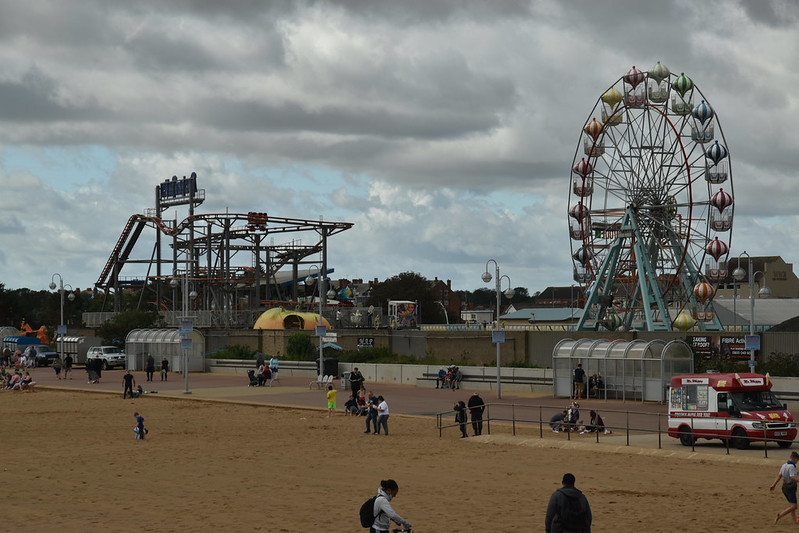
The UK theme park industry is entering a period of quiet but significant change. While major destinations continue to invest in headline attractions and immersive expansions, many of the country’s smaller parks are navigating a far more uncertain future.
Recent closures, shortened operating calendars, and rising costs have sparked a growing debate among enthusiasts and industry watchers alike: can smaller UK theme parks remain viable over the next ten years?
The answer lies somewhere between concern and cautious optimism.
A Sector Already Under Pressure
Over the past few years, several long-established parks have disappeared from the UK attraction landscape. These closures have not been sudden anomalies but part of a gradual trend affecting regional parks that rely heavily on seasonal tourism and local repeat visitors.
In many cases, operators have pointed to familiar challenges — financial strain following the pandemic, declining visitor numbers, and the difficulty of funding large-scale reinvestment. For parks operating on tight margins, even modest downturns can create long-term instability.
The loss of these destinations has been felt beyond enthusiasts. Theme parks often act as economic anchors for their surrounding communities, supporting local jobs, hospitality businesses, and tourism identity. When a park closes, the impact can ripple across an entire region.
The Investment Divide
Perhaps the most visible challenge facing smaller parks is the widening gap between them and the UK’s largest operators.
Major resort parks can justify multi-million-pound attractions that generate national marketing reach and drive destination visits. Smaller parks rarely have that luxury. Their investment cycles tend to be longer, budgets more constrained, and risk tolerance lower.
This creates a difficult perception challenge. Guests comparing day-out options increasingly encounter world-class coasters, themed lands, and immersive environments promoted heavily through social media and advertising. Against this backdrop, parks built around traditional rides can appear dated even when they continue to deliver enjoyable experiences.
The problem is not necessarily quality but visibility and expectation.
Changing Guest Behaviour
Visitor expectations have evolved dramatically over the past decade. A successful park experience is now judged not only on rides but on atmosphere, storytelling, food quality, digital convenience, and overall value.
At the same time, leisure competition has intensified. Affordable flights and short-break travel mean families may weigh a local park visit against a European theme park weekend. Streaming entertainment, indoor attractions, and event-based experiences further fragment consumer attention.
Smaller parks must therefore compete across a broader leisure landscape than ever before, often without the marketing budgets of larger rivals.
Weather, Seasonality, and Economics
Unlike indoor attractions or year-round resorts, many regional parks remain highly dependent on favourable weather and school holiday peaks. A poor summer can quickly translate into reduced cash flow, while fixed operating costs continue regardless of attendance.
Rising energy prices, staffing costs, and maintenance requirements have compounded this vulnerability. Some parks have responded by trimming operating days or concentrating activity into peak periods, but such measures can create a perception of decline if not carefully communicated.
The result is a delicate balancing act between financial sustainability and guest confidence.
Signs of Resilience
Despite these pressures, smaller parks are far from a uniform story of decline. Across the UK, examples exist of parks that have successfully carved out strong market positions without competing directly with the largest resorts.
A common theme among these success stories is clarity of purpose. Parks that understand their audience — often families with younger children — can tailor experiences around accessibility, manageable scale, and strong value perception. Shorter queues, friendly atmospheres, and repeat-visit appeal can become powerful advantages rather than limitations.
Strategic investment also plays a role. Rather than pursuing headline thrill attractions, some parks focus on themed family rides, animal experiences, seasonal events, or accommodation offerings that extend dwell time and diversify revenue.
These approaches demonstrate that survival does not necessarily depend on size but on adaptability.
Reinvention as a Survival Strategy
Looking ahead, the next decade is unlikely to produce a single trajectory for smaller UK theme parks. Instead, a mixture of outcomes seems probable.
Some parks may be acquired by larger groups or investors seeking regional expansion opportunities. Others may gradually shift toward hybrid leisure models that blend traditional rides with events, play attractions, or mixed-use development.
In certain cases, continued attrition is also possible, particularly in areas where broader economic challenges limit tourism growth. Coastal amusement parks have historically faced this pattern, reflecting wider shifts in domestic holiday behaviour.
What links these scenarios is the need for evolution. Static operating models are increasingly difficult to sustain in a rapidly changing leisure environment.
The Importance of Identity
If there is one defining factor separating thriving smaller parks from struggling ones, it is identity.
Successful parks tend to offer a clear reason to visit that goes beyond simple proximity. Whether that identity centres on family friendliness, unique attractions, immersive theming, or strong community connection, it provides a foundation for loyalty and word-of-mouth advocacy.
Without that clarity, parks risk becoming interchangeable day-out options competing primarily on price — a challenging position in any industry.
A Future Still Being Written
The future of smaller UK theme parks is neither guaranteed decline nor assured stability. Instead, it reflects a sector in transition, shaped by economic realities, changing visitor expectations, and evolving leisure habits.
Some parks will undoubtedly disappear, as history has shown. Others will adapt, reinvest, and find new ways to remain relevant within their communities and the wider tourism market.
For enthusiasts and operators alike, the coming years will be a period of watchful interest. The UK’s theme park landscape has always been diverse, blending major destination resorts with local family favourites. Preserving that diversity may ultimately depend on the ability of smaller parks to redefine what success looks like in a modern context.
Because while rides and attractions may change, the value of accessible, local leisure experiences remains difficult to replace.






Conversation
The opinions and views shared in the comments section belong solely to the individual users and do not reflect those of UK Theme Park Spy. UK Theme Park Spy does not endorse, support, or guarantee the accuracy of any content posted by users.