It’s one of the most common theme park questions: do roller coasters actually go faster when it rains?
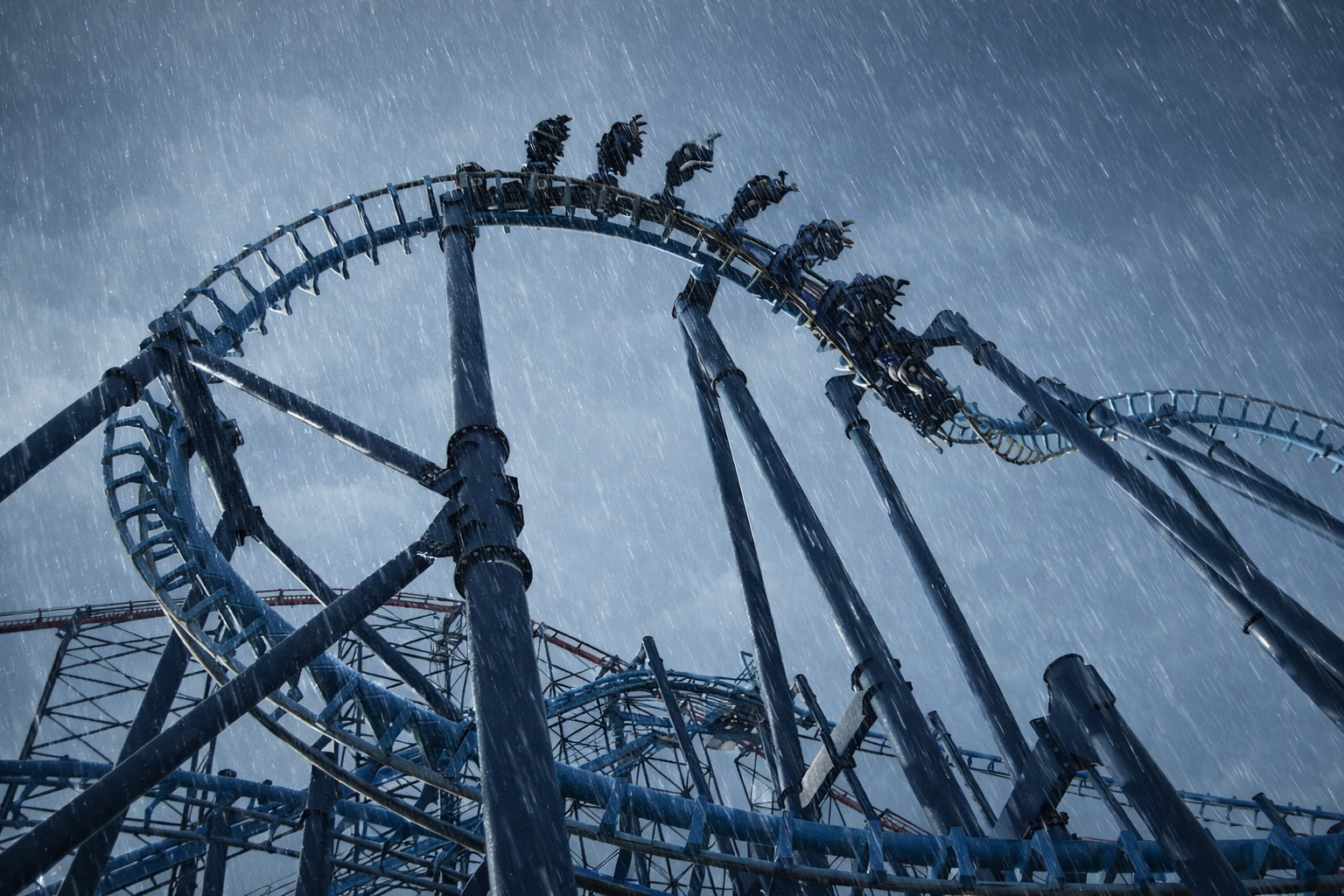
If you’ve ever ridden during a drizzle and felt like your train was tearing through the track faster than usual, you’re not alone. Many enthusiasts swear by it. But is it fact, fiction, or just part of the thrill?
The answer sits somewhere in between.
The Science Behind the Myth
At its core, a roller coaster is a carefully balanced system of gravity, momentum, and friction. Once the train has completed its lift hill or launch, it relies almost entirely on gravity to power the rest of the ride. That means anything affecting resistance—like friction—can influence how fast the train travels.
Rain introduces a subtle but important change.
When water coats the track, it can act as a very light lubricant between the coaster’s wheels and the steel rails. This reduces friction slightly, allowing the train to move more freely. In theory, this means the train can travel marginally faster than it would in completely dry conditions.
However, the keyword here is marginally.
Does Rain Really Make a Noticeable Difference?
In most cases, the difference in speed is extremely small—often just a fraction of a second over the course of the ride. For the average guest, this isn’t something you’ll consciously notice through timing alone.
What you might notice is how the ride feels.
Rain hitting your face at high speed adds an extra layer of intensity. The sensation can make drops feel steeper, turns feel sharper, and the overall experience feel faster—even if the actual speed increase is minimal.
This is why many riders come off a rainy ride convinced it was significantly quicker.
The Role of Weight and Momentum
Another factor sometimes mentioned is the added weight from rain. Wet trains, soaked clothing, and even water pooling slightly in certain areas can increase the overall mass of the train.
In physics terms, a heavier object can carry more momentum once it’s moving. On a roller coaster, this can help the train maintain speed more effectively through elements like hills and inversions.
That said, just like friction reduction, the impact of added weight from rain is very small. It contributes to the effect—but it doesn’t dramatically transform the ride.
Why Coasters Don’t Suddenly Become “Out of Control”
If rain really made coasters significantly faster, it would pose a safety concern. Fortunately, modern roller coasters are designed with this in mind.
Every major ride includes multiple safety systems that regulate speed, including:
- Trim brakes that can slow the train mid-course
- Block sections that control spacing between trains
- Sensors that monitor speed and positioning in real time
If a train begins to run faster than expected, these systems automatically adjust to keep everything operating safely.
In heavier rain or storm conditions, rides may also be temporarily closed altogether—especially if lightning or strong winds are present.
When You’re Most Likely to Feel the Effect
While the speed increase is usually small, there are certain situations where it may be more noticeable:
- Light rain conditions where the ride continues normal operation
- Coasters with long drops, where momentum plays a bigger role
- Rides with minimal trim brakes, allowing trains to run more freely
- Older coasters, which may not regulate speed as tightly as modern designs
These factors can combine to create a ride that feels just a bit quicker and more intense than usual.
Perception vs Reality
One of the biggest reasons this myth persists is the difference between actual speed and perceived speed.
Humans don’t experience speed in a purely mathematical way—we experience it through sensation. Rain amplifies those sensations:
- The sting of raindrops at high speeds
- The sound of water hitting the train and track
- Reduced visibility, adding a sense of unpredictability
All of this tricks the brain into interpreting the ride as faster and more extreme.
So, do roller coasters run faster in the rain?
Technically, yes—they can. Reduced friction and slight increases in momentum can allow trains to move a little quicker.
But in reality, the difference is minimal and carefully managed by the ride’s safety systems.
What you’re really experiencing is a more intense version of the same ride—one that feels faster, wilder, and more exhilarating thanks to the added sensory effects of the rain.
Bottom Line
Rain doesn’t dramatically change how a roller coaster operates—but it does change how it feels.
And sometimes, that’s enough to turn a great ride into an unforgettable one.
Follow UK Theme Park Spy on Facebook. Stay up to date with the latest news, ride updates, construction progress, events, and exclusive offers
Be the First to Hear the Latest Theme Park News
From ride announcements to park updates and visitor guides, we cover it all. Add us as a Preferred Source in Google to make sure you never miss our latest stories.
Click here and tick UKThemeParkSpy.com to ensure you see stories from us first in Google Search.