Rollercoasters are designed to deliver incredible speeds, steep drops and thrilling inversions. But while getting a train moving is an impressive feat of engineering, bringing it safely to a stop is just as important.
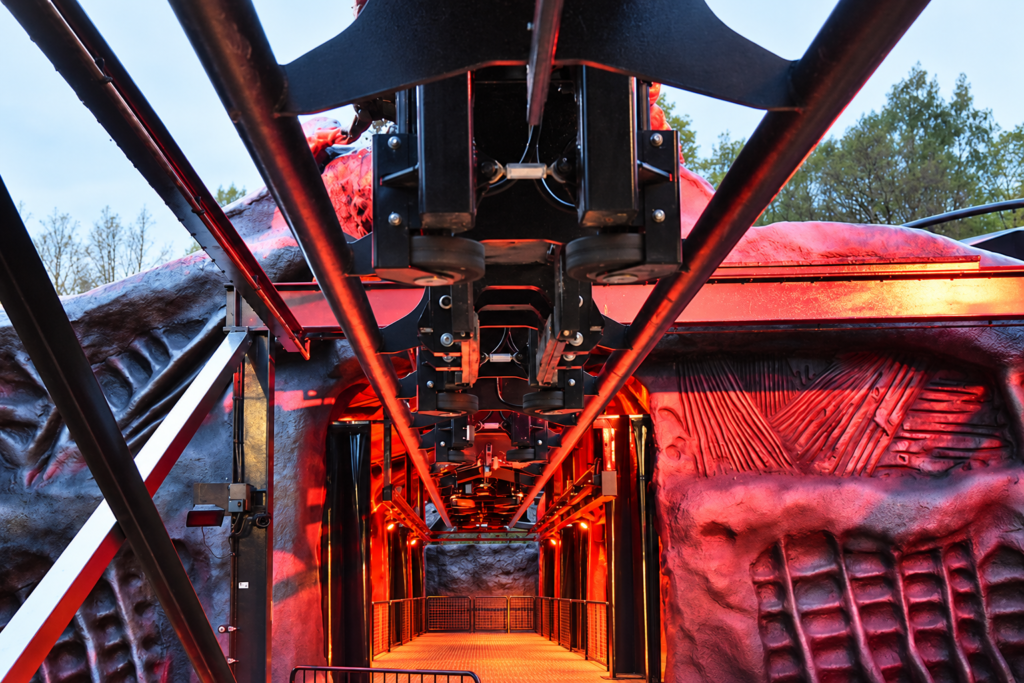
From powerful magnetic brakes that slow trains without touching them to friction brakes that grip metal fins, modern rollercoasters use a combination of technology, physics and computer-controlled safety systems to manage every journey.
So, how exactly do rollercoaster brakes work, and how do theme parks ensure trains can operate safely on the same track?
Why Do Rollercoasters Need Brakes?
Unlike a car, most modern rollercoaster trains do not rely on a driver applying brakes from inside the vehicle. Instead, their braking systems are installed along the track and controlled by the ride’s operating systems.
Brakes have several important jobs. They bring trains into stations, control speeds at specific points on the circuit, help separate trains running on the same ride and stop trains when the control system determines that it is not safe to continue.
A rollercoaster also has to deal with changing speeds throughout its journey. Gravity accelerates the train as it descends hills, while friction and air resistance gradually remove energy. Braking systems give engineers a way to manage that movement within carefully designed limits.
The key is not simply stopping a train as quickly as possible. It is slowing it down in a controlled manner while accounting for its speed, weight and position on the track.
1. Magnetic Brakes: Stopping Trains Without Touching Them
One of the most fascinating technologies used on modern rollercoasters is magnetic braking.
Unlike conventional brakes, which slow a train through physical contact, magnetic brakes can generate resistance without the braking components touching each other.
This is possible because of a scientific principle known as electromagnetic induction.
How do magnetic brakes work?
Many rollercoaster magnetic braking systems use permanent magnets positioned close to a conductive metal fin attached to the train.
As the train passes the magnets, its movement through the magnetic field creates swirling electrical currents inside the metal. These are known as eddy currents.
The currents generate their own magnetic field, which opposes the movement that produced them. This creates a braking force that slows the train down.
In simple terms, the faster the metal fin moves through the magnetic field, the stronger the braking effect generally becomes within the system’s operating range.
The result is smooth, controlled deceleration without conventional brake pads clamping onto the fin.
Why are magnetic brakes useful?
Magnetic brakes offer several advantages:
- Smooth braking: The train can slow down without the sudden gripping action associated with some friction systems.
- Reduced mechanical wear: Because the magnetic components do not need to touch the moving fin, there is less wear at the braking interface.
- Reliable operation: Permanent-magnet systems can produce a braking force without requiring an external electrical supply to generate the magnetic field.
- Speed-responsive braking: Eddy-current braking naturally becomes weaker as the train slows.
However, magnetic brakes have an important limitation. Their braking force falls towards zero as the train approaches a standstill.
That means they cannot, on their own, hold a train stationary in the same way as a conventional friction brake. Other mechanisms may be needed to bring the train to a complete stop or hold it in position.
Magnetic braking is therefore particularly useful when engineers want to slow a fast-moving train smoothly and predictably.
2. Friction Brakes: The Power of Grip
While magnetic brakes use electromagnetic forces, friction brakes work through direct physical contact.
A common design on modern rollercoasters is the fin brake. A metal fin attached to the underside of the train passes between braking assemblies mounted on the track.
When braking is required, the assemblies clamp onto the fin using friction pads. The resistance between the pads and the moving metal slows the train.
It is a similar principle to the way friction brakes work on a car, although the design and operating mechanisms are different.
How do rollercoaster friction brakes work?
The process can be broken down into three stages.
1. The train enters the braking section.
As the train approaches a brake run, sensors and the ride control system help determine whether braking is required.
2. The brakes grip the metal fin.
The braking mechanism applies pressure to the fin, creating friction that opposes the train’s movement.
3. The train loses speed.
The train’s kinetic energy is transferred mainly into heat through the braking process. The system is designed to slow the train within its intended operating limits.
Friction brakes are particularly useful because they can bring a train to a complete stop and, in suitable designs, hold it stationary.
What happens if the ride loses power?
Many modern friction-brake systems are designed around a fail-safe principle.
In a common spring-applied, pneumatically released arrangement, springs apply the brakes while compressed air holds them open during normal operation.
If the system loses the air pressure or electrical control needed to keep the brakes released, the springs can apply the brakes automatically.
This means that, in the relevant failure conditions, the system moves towards its braking state rather than leaving the train free to continue moving.
Not every rollercoaster uses exactly the same arrangement, but designing brakes to respond safely to faults is a crucial part of ride engineering.
3. Block Sections: How Rollercoasters Keep Trains Apart
Have you ever wondered how a busy rollercoaster can operate several trains at once without them colliding?
The answer involves block sections, also known as block zones.
A block section is a defined section of track that is managed as part of the ride’s train-separation system. On many conventional multi-train rollercoasters, the system is designed to prevent more than one train from occupying the same block at the same time.
These sections are commonly separated by braking points, although the exact layout and control arrangements vary between rides.
How does a block system work?
Imagine a rollercoaster operating three trains.
- Train A is approaching the final brake run.
- Train B is travelling through the middle of the circuit.
- Train C is leaving the station.
The ride’s control system monitors train positions and the status of the relevant track sections.
If Train A has not cleared the section ahead, Train B may be prevented from entering it. A block brake can stop Train B at a designated point until the route ahead becomes available.
Once the system confirms that the required section is clear and the other operating conditions are satisfied, the train can be permitted to proceed.
This process allows rides to operate multiple trains while maintaining controlled separation between them.
What if a train stops unexpectedly?
A rollercoaster might stop because of a sensor fault, an operating interruption or another condition that requires the ride to halt.
The block system helps prevent another train from entering an occupied section. Depending on the ride’s design and the location of the stopped train, following trains may stop at designated brake sections or other safe stopping points.
This is one reason you might occasionally see a rollercoaster train stationary on a section of track during normal operations or a temporary interruption.
A stopped train does not automatically mean something dangerous has happened. It may be the expected result of a safety system doing its job.
4. Ride Control Systems: The Brains Behind the Brakes
Brakes are only one part of the system that keeps a modern rollercoaster operating safely.
Electronic control systems, sensors and other monitoring equipment work together to track the ride’s operating state.
Depending on the design, sensors may detect a train’s presence at particular points, confirm that components have reached the required position and provide information used to manage train movement.
The control system processes this information against programmed operating conditions.
For example, it may need to establish that:
- The next block section is available.
- A train has reached or cleared a particular section.
- The relevant braking equipment is in the required state.
- The ride’s safety circuits and operating conditions permit movement.
If the necessary conditions are not met, the system can prevent a train from proceeding or initiate a stop, depending on the fault and the ride’s design.
These systems are engineered and tested for the particular attraction. They are not simply ordinary computers telling trains when to move; they form part of a wider safety architecture that includes mechanical equipment, sensors, electrical controls and operational procedures.
Why do rollercoasters sometimes stop on the track?
When a ride pauses unexpectedly, the cause may be a sensor reading, an operating condition, a technical fault or a train-separation requirement.
For example, if a train has not cleared a block as expected, the control system may prevent the next train from advancing.
The ride might then require checks or a reset by trained operators and engineers before normal operation can resume.
Although an unexpected stop can be frustrating for visitors, preventing a train from continuing when the system cannot confirm the necessary conditions is an important safety function.
5. Trim Brakes: Controlling Speed During the Ride
Not every brake is designed to bring a rollercoaster to a complete stop.
Some are known as trim brakes. These are positioned along the circuit to reduce a train’s speed when necessary.
A trim brake might be installed before a high-speed turn, an airtime hill or another element where designers want to keep the train within its intended speed range.
Trim brakes can use friction or magnetic technology, depending on the ride’s design.
Their purpose is different from that of a final brake run. Rather than ending the ride, they adjust the train’s speed while it continues through the circuit.
Why would a rollercoaster need to slow down halfway through?
A rollercoaster’s speed can vary with factors such as its loading, environmental conditions and the way it moves through the track layout.
Designers account for these variations when developing the ride. Braking systems can help manage speed so the train operates within the limits established for the attraction.
For thrill-seekers, a trim brake might slightly change the intensity of a particular element. From an engineering perspective, however, speed control is part of delivering the ride experience within its intended operating conditions.
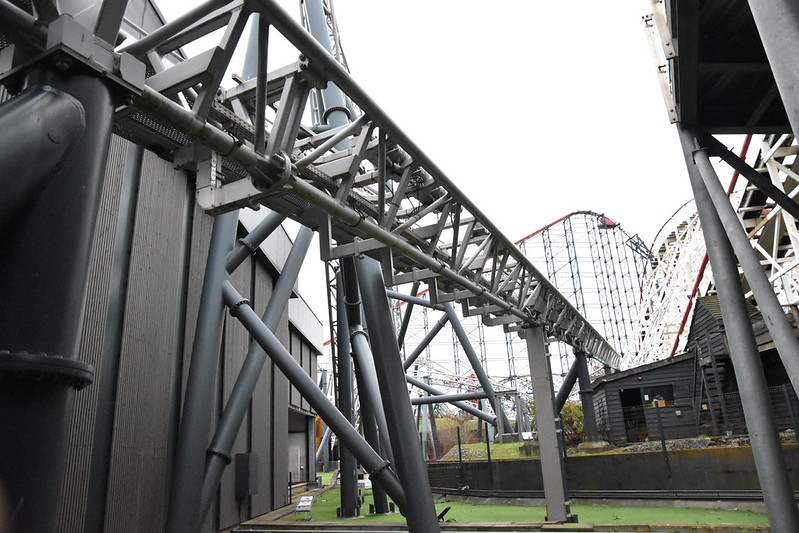
6. Final Brake Runs: Bringing the Ride to a Stop
Near the end of a rollercoaster circuit, trains usually enter a final braking section before reaching the station.
This section is designed to reduce the train’s speed sufficiently for the station’s operating requirements.
Depending on the attraction, the final brake run may use friction brakes, magnetic brakes or a combination of braking and other stopping mechanisms.
The aim is to bring the train into the station at a controlled speed, ready for unloading and the next operating cycle.
The braking section must account for the train’s expected operating conditions, including its speed and loading. Engineers design the system so it can perform its intended function across the specified range of conditions.
Once the train reaches the station, further braking or drive systems may control its final movement and position.
7. The Physics of Stopping a Rollercoaster
The science behind rollercoaster braking comes down to energy.
A moving train has kinetic energy — the energy an object possesses because of its motion. The faster the train travels, the more kinetic energy it has.
The relationship is described by the equation:
Kinetic energy = ½ × mass × velocity²
This means that kinetic energy increases with the square of speed.
For example, if a train’s speed doubles while its mass remains the same, its kinetic energy becomes four times greater.
That is a major consideration when engineers design braking systems.
A fast-moving train has a substantial amount of energy that must be managed before it can stop. Braking systems transfer that energy into other forms, most notably heat in friction brakes and the conductive metal used in eddy-current braking.
The braking force, available distance, train speed and other operating conditions all influence how a train slows down.
Engineers must account for these factors when designing the braking sections and the wider ride control system.
8. Why Rollercoaster Brakes Are Designed with Safety in Mind
Rollercoaster braking systems are not designed around a single component working perfectly in every situation.
Ride safety depends on the complete system, including the track layout, train design, braking equipment, sensors, control logic, inspections and operating procedures.
Different attractions use different engineering solutions, and not every rollercoaster has identical braking arrangements.
However, several principles are central to modern ride design:
- Controlled stopping: Trains must be slowed and stopped within their designed operating limits.
- Train separation: Where multiple trains operate, the ride’s control system manages their movement through defined sections.
- Fault response: Safety-related systems are designed to respond appropriately when required conditions are not met.
- Inspection and maintenance: Braking components and monitoring equipment must be maintained according to the attraction’s requirements.
- System testing: Ride systems must be tested to establish that their braking and control functions perform as intended.
These measures work together. A brake on its own cannot manage every possible operating situation, which is why the wider control and safety systems are so important.
Conclusion: The Science That Makes the Thrills Possible
Rollercoaster brakes are a fascinating example of physics and engineering working together.
Magnetic brakes use electromagnetic induction to slow trains without conventional physical contact. Friction brakes use grip to reduce speed and bring trains to a stop. Block sections help keep trains separated, while ride control systems monitor operating conditions and manage when trains can proceed.
Trim brakes adjust speed during the circuit, and final brake runs bring trains back towards the station.
The next time you ride a rollercoaster, remember that the thrilling drops and high-speed turns are only part of the engineering story. Behind every ride is a carefully designed system that manages movement, controls speed and helps bring each train safely back to the station.
The science of stopping is every bit as important as the science of going fast.
Follow UK Theme Park Spy on Facebook. Stay up to date with the latest news, ride updates, construction progress, events, and exclusive offers
Be the First to Hear the Latest Theme Park News
From ride announcements to park updates and visitor guides, we cover it all. Add us as a Preferred Source in Google to make sure you never miss our latest stories.
Click here and tick UKThemeParkSpy.com to ensure you see stories from us first in Google Search.