Have you ever felt yourself being pushed down into your seat on a rollercoaster, experienced a strange floating sensation over a hill, or felt your stomach drop during a steep descent?
These sensations are caused by something known as G-forces.
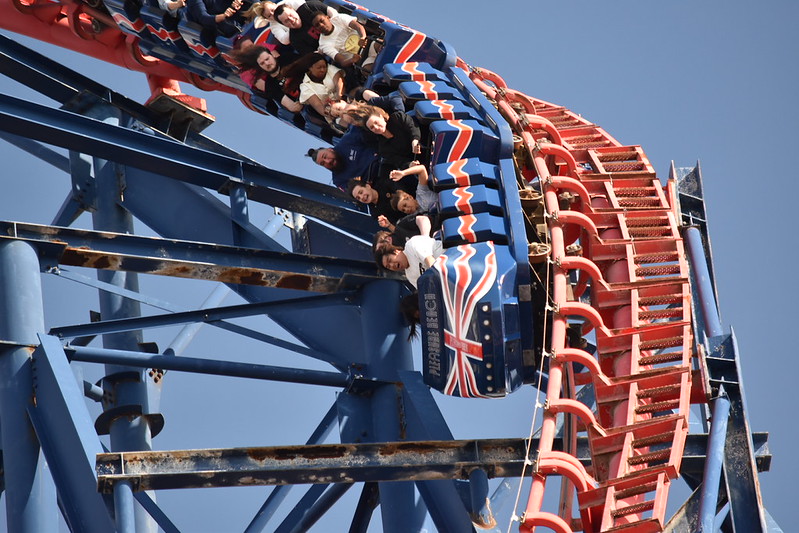
G-forces are a major part of what makes rollercoasters exciting. They influence how riders feel during sudden drops, tight turns, inversions and high-speed launches. Some rides use powerful positive G-forces to push riders into their seats, while others use negative G-forces to create the sensation of weightlessness.
But what exactly are G-forces, how do rollercoasters create them, and why do some rides feel much more intense than others?
Let’s explore the science behind one of the most important elements of rollercoaster design.
What Are G-Forces?
The letter G stands for gravity, the force that pulls objects towards the Earth.
When you are standing still on the ground, you experience approximately 1G of acceleration due to gravity. This is your normal weight under Earth’s gravitational pull.
However, when a rollercoaster accelerates, changes direction or moves over hills and drops, your body experiences changes in acceleration. These changes create the sensations known as G-forces.
For example:
- 1G: Your normal feeling of weight while standing on the ground.
- 2G: You feel approximately twice as heavy as normal.
- 3G: You feel approximately three times as heavy as normal.
- 0G: You experience apparent weightlessness.
- Negative G-forces: You experience a sensation of being lifted out of your seat.
Rollercoaster designers carefully control these forces to create exciting experiences while keeping rides within their designed safety limits.
What Are Positive G-Forces?
Positive G-forces occur when acceleration makes you feel heavier than normal.
On a rollercoaster, this commonly happens at the bottom of a drop, during tight turns or when a train pulls out of a fast descent.
Imagine a rollercoaster travelling down a steep hill before entering a curved section at the bottom. As the train changes direction and begins travelling upwards, the track pushes the train and its passengers upwards.
Your body experiences this as an increase in weight, pushing you firmly into your seat.
This is why riders sometimes feel particularly heavy during certain sections of a rollercoaster.
Where might you experience positive G-forces?
- At the bottom of a steep drop.
- During fast, banked turns.
- When pulling out of a dive.
- During certain high-speed transitions.
Positive G-forces are often responsible for that powerful feeling of being pressed into your seat.
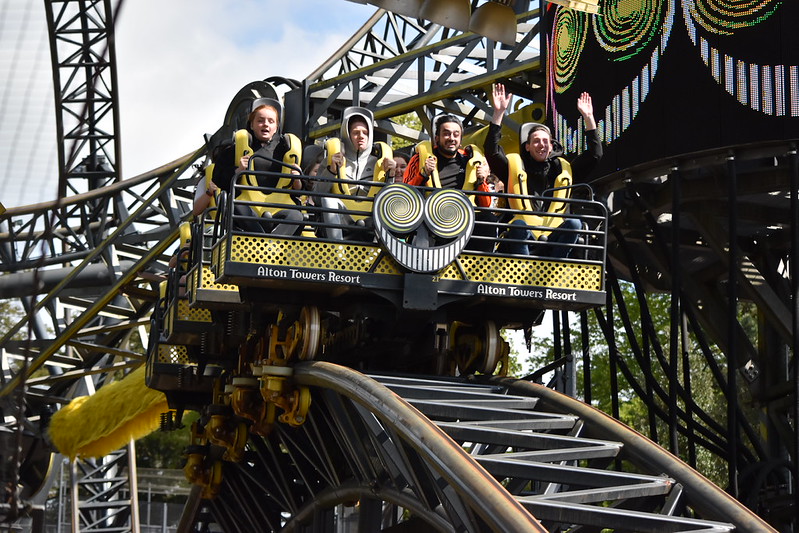
What Are Negative G-Forces?
Negative G-forces create almost the opposite sensation.
Instead of feeling heavier and being pushed into your seat, you can feel lighter, as though your body is being lifted upwards.
This sensation is commonly associated with airtime.
Airtime happens when a rollercoaster travels over a hill or hump in such a way that passengers experience reduced apparent weight. At the right speed and track shape, riders can feel as though they are floating above their seats.
Some rollercoasters are specifically designed to create powerful airtime moments, making passengers feel as though they are briefly leaving their seats.
Where might you experience negative G-forces?
- Over steep hills.
- On airtime hills.
- During certain drops and track transitions.
- On rides designed to deliver strong ejector airtime.
There are different levels of airtime, from gentle floating sensations to much stronger moments that make riders feel lifted out of their seats.
What Is Zero-G?
Zero-G is the sensation of weightlessness.
It occurs when your body experiences approximately 0G of apparent acceleration, meaning you no longer feel the usual downward pressure from your seat.
Rollercoasters can create this sensation when the train travels over a specially designed hill at the right speed.
For a brief moment, your body and the train follow a similar downward-curving path, making you feel as though you are floating.
Zero-G is particularly noticeable on some modern rollercoasters, especially those featuring airtime hills and specially designed inversions.
It is one of the reasons certain rides can feel completely different from traditional rollercoasters.
What Is Lateral G-Force?
Not all G-forces act vertically.
Lateral G-forces occur when your body experiences acceleration from side to side.
These forces are commonly associated with turns, particularly when a rollercoaster changes direction quickly.
Older rollercoasters sometimes featured unbanked turns that pushed riders sideways against the restraints or the sides of their seats.
Modern rollercoaster designers often use banked turns, where the track tilts into the direction of travel. This helps manage sideways forces and can make high-speed turns more comfortable.
Lateral forces are another important consideration when designing a rollercoaster.
Why Do Some Rollercoasters Feel More Intense Than Others?
Have you ever ridden two rollercoasters travelling at similar speeds but found one considerably more intense?
That’s because speed alone does not determine how intense a rollercoaster feels.
Several factors influence the experience.
1. The strength of the G-forces
A ride producing stronger positive G-forces can make passengers feel much heavier, while strong negative G-forces can create powerful airtime sensations.
2. How quickly the forces change
A sudden transition from one force to another can feel particularly dramatic. Rapid changes in direction and acceleration can make a rollercoaster feel more aggressive.
3. The duration of the forces
A brief burst of high G-forces can feel very different from a sustained period of acceleration.
4. The direction of the forces
Vertical forces, sideways forces and changes between them all affect how passengers experience a ride.
5. The layout of the track
Steep drops, tight turns, inversions, airtime hills and rapid transitions all contribute to a rollercoaster’s overall intensity.
This is why a slower rollercoaster can sometimes feel more intense than a much faster ride.
How Do Rollercoaster Designers Control G-Forces?
G-forces are an important consideration throughout the rollercoaster design process.
Engineers use physics, computer modelling and testing to understand how a train will behave as it travels around the track.
They carefully consider factors such as:
- The shape and curvature of the track.
- The speed of the rollercoaster train.
- The height and length of drops.
- The banking of corners.
- The positioning of inversions.
- The forces experienced by passengers.
The aim is to create an exciting experience while keeping acceleration and passenger forces within the ride’s engineered operating limits.
Modern rollercoasters are designed with carefully calculated transitions to help avoid unnecessarily abrupt changes in forces.
Are High G-Forces Dangerous?
Experiencing G-forces is a normal part of riding a rollercoaster, and rides are designed around specific engineering and safety requirements.
However, high acceleration can place additional demands on the human body.
Sustained positive G-forces can affect blood circulation, while sudden or uncomfortable changes in acceleration can cause discomfort.
This is one reason rollercoasters have height restrictions, safety instructions and, where appropriate, health warnings.
Passengers should always follow the ride’s safety guidance and avoid riding if they do not meet the stated health requirements.
The Science Behind the Thrill
G-forces help explain why rollercoasters create such a wide range of sensations.
Positive G-forces push you into your seat, negative G-forces create airtime, zero-G produces weightlessness, and lateral G-forces influence how you feel during turns.
Together, these forces help transform a simple train travelling along a track into an exciting experience filled with drops, twists, turns and floating sensations.
The next time you ride a rollercoaster, pay attention to how your body feels at the bottom of a drop, over an airtime hill or around a tight corner.
You will be experiencing physics in action!
Did you know? A rollercoaster travelling at a high speed does not automatically produce the strongest G-forces. The shape of the track and how quickly the train changes direction are just as important.
Follow UK Theme Park Spy on Facebook. Stay up to date with the latest news, ride updates, construction progress, events, and exclusive offers
Be the First to Hear the Latest Theme Park News
From ride announcements to park updates and visitor guides, we cover it all. Add us as a Preferred Source in Google to make sure you never miss our latest stories.
Click here and tick UKThemeParkSpy.com to ensure you see stories from us first in Google Search.