If you’ve ever ridden a traditional rollercoaster, you’ll probably recognise the sound before you even reach the top of the lift hill.
That familiar click-click-click-click noise is one of the most recognisable sounds in the theme park world. As the train slowly climbs towards the first big drop, a series of metallic clicks echoes around the ride.
But have you ever wondered what actually makes that noise? And more importantly, why is it there?
The answer lies in a clever piece of engineering known as the anti-rollback mechanism.
What Is the Anti-Rollback Mechanism?
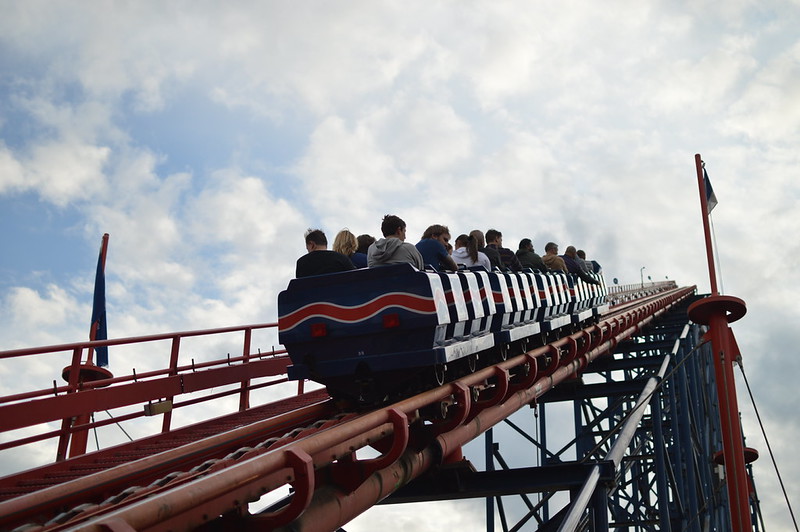
The anti-rollback mechanism is an important safety feature fitted to many traditional rollercoasters, particularly those using chain lift hills.
Its main purpose is to prevent the rollercoaster train from rolling backwards down the lift hill if something goes wrong during the climb.
For example, if the lift chain stops unexpectedly because of a mechanical or electrical fault, gravity would naturally try to pull the train back down the incline.
The anti-rollback system is designed to stop this from happening, helping keep the train safely in position.
What Are Chain Dogs?
One of the key components involved is a device called a chain dog.
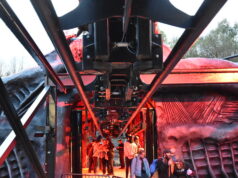
Chain dogs are specially designed mechanical components fitted underneath the rollercoaster train. As the train travels up the lift hill, these components interact with the anti-rollback system positioned along the track.
As the train climbs, the chain dog moves over a series of metal teeth or ratchet-like components.
Each time it passes one of these teeth, it produces the distinctive clicking sound that passengers hear throughout the ascent.
The mechanism allows the train to continue travelling forwards while helping prevent it from moving backwards.
Why Does It Make That Clicking Noise?
The famous clicking sound is produced by the repeated engagement of the anti-rollback components as the train moves up the lift hill.
Think of it like a ratchet mechanism on a socket wrench or a bicycle freewheel. As the mechanism moves in one direction, its components repeatedly pass over small teeth, producing a series of clicks.
On a rollercoaster, these clicks happen repeatedly as the train climbs the track.
The speed and rhythm of the noise can vary depending on the design of the ride, the spacing of the teeth and how quickly the train is travelling.
It’s also why some rollercoasters have a much louder lift hill sound than others!
What Happens If the Lift Chain Stops?
This is where the anti-rollback system becomes particularly important.
If the lift chain suddenly stops pulling the train uphill, gravity will attempt to move the train backwards.
However, the anti-rollback mechanism is designed to engage and prevent the train from rolling back down the incline.
Depending on the coaster’s design, the mechanism can engage with the ratchet teeth or another form of anti-rollback device, holding the train in place.
This is an important part of rollercoaster safety engineering, particularly on steep lift hills where a backwards movement could be dangerous.
Do All Rollercoasters Make This Sound?
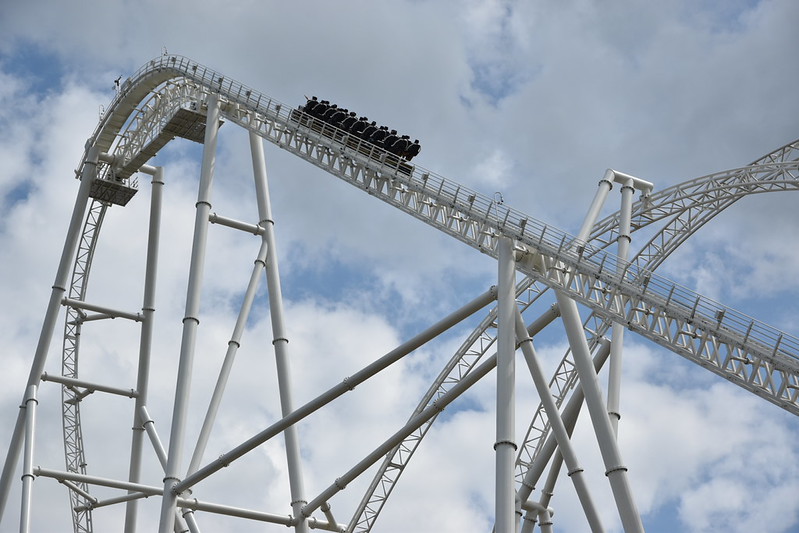
Not all rollercoasters have the familiar clicking lift hill noise.
Traditional chain lift coasters commonly use mechanical anti-rollback systems, making the sound familiar to generations of theme park visitors.
However, modern rollercoasters can use different technologies.
Some rides use cable lifts, tyre-driven lift systems, magnetic launches or other forms of propulsion that don’t produce the same traditional clicking sound.
Even among chain-lift rollercoasters, the sound can vary depending on the manufacturer’s design and the type of safety mechanism installed.
A Small Sound With a Big Job
The next time you find yourself slowly climbing a rollercoaster lift hill, listen carefully to those familiar clicks.
What might sound like nothing more than a repetitive mechanical noise is actually part of an important safety system working behind the scenes.
The anti-rollback mechanism, chain dogs and ratchet-style components all play a role in helping keep rollercoaster trains secure as they climb towards that first big drop.
So, while the clicking might build anticipation for the exciting ride ahead, it’s also a reminder of just how much engineering goes into making rollercoasters operate safely.
Did you know? That famous rollercoaster lift hill clicking sound isn’t just part of the atmosphere – it’s associated with an important mechanical safety system!
We'd love to hear your thoughts!
Join the conversation by leaving a comment on our Facebook page and let us know what you think. We love hearing your opinions!
Be the First to Hear the Latest Theme Park News
From ride announcements to park updates and visitor guides, we cover it all. Add us as a Preferred Source in Google to make sure you never miss our latest stories.
Click here and tick UKThemeParkSpy.com to ensure you see stories from us first in Google Search.